
Public roadmap · September 2026

Master
Plan

Build the evidence for transportation one step at a time, with space energy as our core business. This roadmap separates milestones tied to calendar dates from progress governed by evidence gates.

A plan, not a launch promise※1

Why we build

Generate, store,
and deliver energy in space.

Space energy is the core business of Copernicus Sust Space. Rockets are the transportation system for energy infrastructure, people, satellites, robots, spacecraft, and cargo.

We will not leap straight into the largest vision. We observe, calculate, run numerical experiments, conduct safe tests, and retain evidence through independent review. Each new capability opens only after the preceding conditions are met.

Calendar roadmap

Only the dates we have set,
with only the meaning we have set.

The only specific dates we can publish today are November 2027 and November 2028.※2

NOW · 2026

Build verification before flight

Define measurable Nicolaus 1 requirements, run numerical experiments to examine design assumptions, establish independent safety review, and prepare the necessary people, location, legal, and funding conditions. Hazardous combustion, high-pressure work, and real-vehicle flight have not begun.
CURRENT PHASE
NOV · 2027

Nicolaus 1 Flight 1

This is the earliest planning target, not a promised date. It will be postponed automatically unless every gate is satisfied, including safety, regulatory approval, quality, insurance, launch site, and recovery.

EARLIEST TARGET · CONDITIONAL
NOV · 2028

Milestone remains OPEN

We retain the date as a target, but have not yet decided what must be complete by then. The milestone will be defined only after reviewing the available evidence and progress.

DATE HELD · MILESTONE OPEN

Progress by evidence

No invented dates.
Progress by evidence.

Instead of filling undecided timelines with guesses, we publish the conditions required to move forward.

N1 FLIGHT

COMPLETE SUCCESS

Confirm an altitude of at least 100 km using multiple pre-defined measurement datasets; transmit the data to the ground and store it onboard; meet the pre-defined ocean-splashdown criteria; and locate and recover the vehicle itself. Complete all four conditions three times in total, then finish the required reviews.

Completion date: OPEN
N1 → N2

TRANSITION REVIEW

After three complete Nicolaus 1 successes and the required reviews, we will make a separate decision on whether to proceed to the next generation. Flight count alone will not trigger an automatic transition.

Program start and first-flight timing: OPEN
N2 → N3

SYSTEM REVIEW

We will review the Rocket, partial reuse, Energy, Transfer, Receiver, Pilot, and Business conditions. A development decision for the third generation will be made only when the necessary evidence is available.

Program start and first-flight timing: OPEN

Vehicle roadmap

From small successes
to large-scale transportation.

A name or flight count does not move the program forward. The next development decision is made only after each generation meets its conditions and completes review.

N1

The first complete success

Target an altitude of at least 100 km with a single-stage, fully uncrewed vehicle, and verify the data, splashdown, location, and recovery. Confirm the same complete success three times before proceeding to the next generation.

Current primary focus
N2

Low Earth orbit and partial reuse

Design targets include delivering up to 200 kg to low Earth orbit, completing at least five flights, carrying an in-house satellite, reusing primarily the first stage, and demonstrating energy transfer with a Copernicus-owned vehicle.

Design target · Unproven
N3 / HEAVY

Full reuse and expanded transportation

Nicolaus 3 targets up to 500 kg and full-vehicle reuse. Heavy is a derivative concept using three standard cores; it is not the fourth generation.

Design target · Feasibility OPEN
ULTRA

Large-scale transport to the Moon and Mars

A long-term concept for the Moon, Mars, Kepler, and large cargo. Its exterior form and engine arrangement are design targets; performance, structure, and timing remain unverified.

Long-term concept

Cost roadmap

Lower cost will not come
from omitting safety.

We will iterate design and analysis digitally, concentrating funding on manufacturing, testing, facilities, operations, and recovery. Reuse will count toward cost reduction only after evidence shows that the same vehicle can fly again safely.

Unverified long-term cost hypothesisAn unadopted and unverified long-term hypothesis of 75,000 Japanese yen per flight

Per flight · Not formally adopted※3

The first step

First, Nicolaus 1.

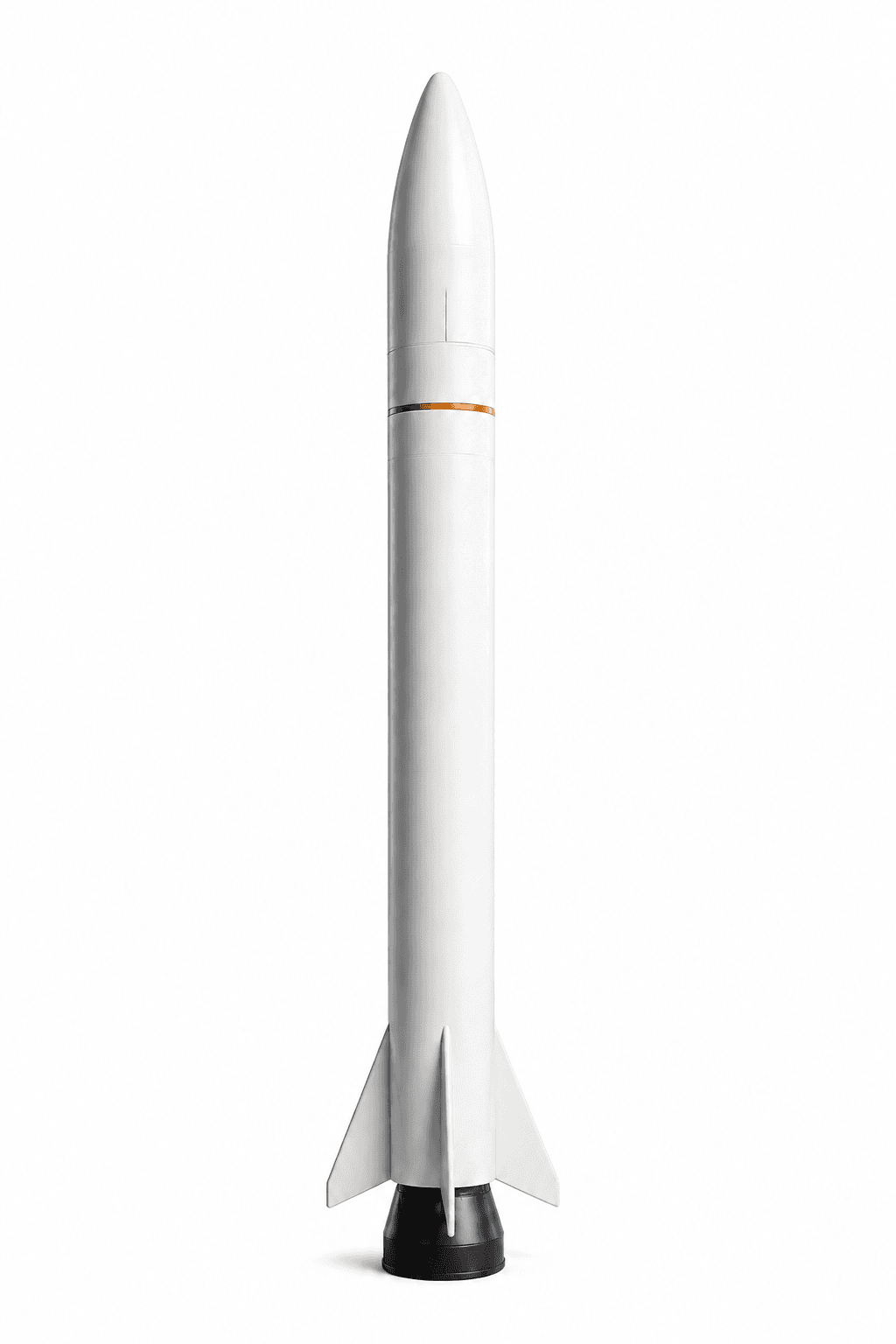
The first step toward making this Master Plan real is an uncrewed flight targeting a peak altitude of at least 100 km. We will not build the entire future at once; we will complete one full cycle of requirements, numerical experiments, safety review, assessment, and verification.

Nicolaus 1 exterior visualization on a light background.
Nicolaus 1 · Exterior concept※4

Notes

  1. ※1
    This page distinguishes the formal plan from proposals that are explicitly not adopted. It does not authorize design, manufacturing, testing, or launch activity, and it does not represent implemented capability.
  2. ※2
    Neither November 2027 nor November 2028 is an achievement or a promise. November 2027 is the earliest target subject to all gates; the milestone for November 2028 remains undecided.
  3. ※3
    This is a provisional per-flight target under consideration. It is not a formal target, current cost, sales price, or achieved result. The vehicle, timing, cost scope, number of reuses, and operating conditions remain undecided.
  4. ※4
    The Nicolaus 1 image is a CG visualization of its exterior concept, not a photograph of flight hardware.